

Move More, Live More: The Power of Jogging
Of the many exercises, jogging is one of the simplest and most rewarding. By marrying accessibility to a host of health benefits, it has become perhaps the cornerstone in the fitness regimens of all individuals worldwide. This comprehensive guide explores jogging’s advantages and goes so far as to provide data-driven insights and offers practical tips in making jogging an enriching activity as part of one’s life routine.
Why Jogging is a Crucial Part of Physical Fitness
Of all the aerobic exercises, jogging stands out because it can combine physical, mental, and social benefits. Here’s why jogging deserves space in your schedule:
1. Improves Cardiovascular Health
Jogging strengthens the heart and improves blood circulation to reduce the risk of heart diseases. The process of regular jogging regulates blood pressure and cholesterol levels, hence creating a strong cardiovascular system.
2. Boosts Endurance and VO2 Max
VO2 Max, a measure of maximum oxygen consumption, directly correlates with endurance. Research consistently shows that regular jogging increases VO2 Max, enhancing stamina and overall fitness.
3. Facilitates Weight Management
Jogging is a calorie-burning powerhouse. A 30-minute jog at a moderate pace can burn 300–400 calories, making it ideal for weight loss and fat reduction.
4. Enhances Mental Health
The rhythmic jogging motion releases endorphins, also commonly referred to as “happy hormones.” These not only help to reduce stress but also combat anxiety and depression.
5. Supports Longevity
According to studies, regular joggers can increase their life expectancy by up to 6 years since health is improved and resistance to chronic diseases enhanced.
Statistical Insights: The Evolution of Jogging’s Popularity
In recent years, jogging has picked up immense pace globally. The table below depicts some global trends in jogging participation and its effects on health markers.
Year Worldwide Jogging Participants (%) Average Increase in VO2 Max (mL/kg/min) Weight Loss Impact (lbs)
| Year | Global Jogging Participants (%) | Average VO2 Max Increase (mL/kg/min) | Weight Loss Impact (lbs) |
|---|---|---|---|
| 2000 | 25% | 4.2 | 5.5 |
| 2010 | 35% | 5.8 | 7.1 |
| 2020 | 45% | 6.5 | 8.2 |
| 2023 | 50% | 7.3 | 9.4 |
Research Spotlight: Jogging’s Role in Physical Fitness
A study conducted at Universitas Negeri Padang showed the significant effect of jogging on physical fitness. The subjects, 20 students, were engaged in a systematic jogging program for 3 weeks. The results indicated an increase of 11.15% in VO2 Max scores, thus meaning that endurance and respiratory efficiency had significantly improved.
Key Findings:
Pre-test VO2 Max Average: 45.3 mL/kg/min
Post-test VO2 Max Average: 50.35 mL/kg/min
Improvement: 5.05 mL/kg/min
The t-test done in the research proved the statistical significance of these enhancements, hence establishing jogging as an effective way to enhance one’s fitness.
Growth of Jogging Participation: Year-Wise (Graph)
The growth of jogging participation around the world for the last two decades is presented in graphical form below:
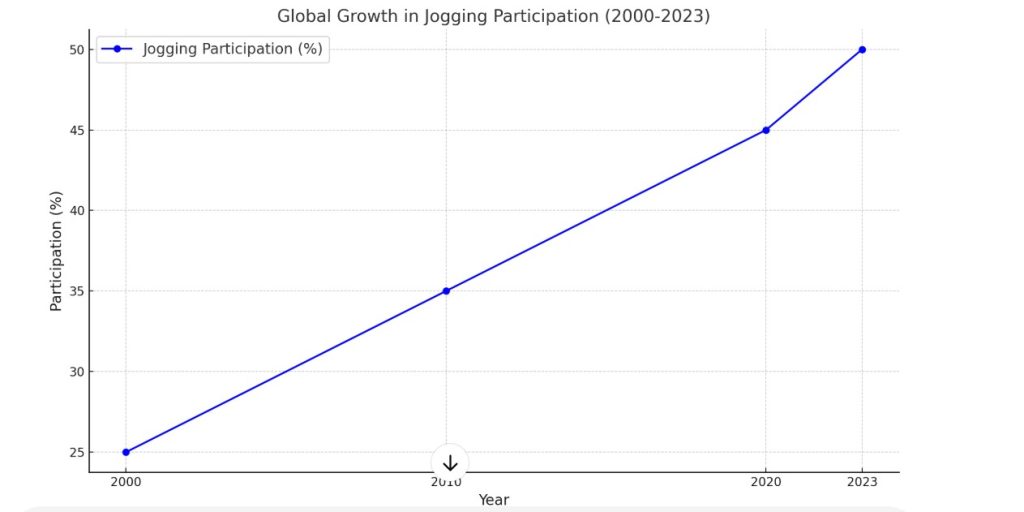
The graph above illustrates the growth of jogging activities worldwide from the year 2000 to 2023, hence showing the increase in popularity of this sport for health purposes.
How to Start Jogging: Tips for Beginners
1. Ease Into It
Start with brisk walking and gradually add jogging intervals. A beginner’s routine might include 1 minute of jogging followed by 2 minutes of walking for 20–30 minutes.
2. Invest in Quality Gear
A good pair of running shoes is essential to prevent injuries and provide adequate support. Comfortable activewear also enhances your jogging experience.
3. Set Realistic Goals
Aim for achievable milestones, such as jogging continuously for 10 minutes or completing a 2-mile route.
4. Monitor Progress
Use apps like Strava, Nike Run Club, or MyFitnessPal to track your jogging distance, speed, and calories burned.
5. Warm Up and Cool Down
Always begin with a 5–10 minute warm-up to get your muscles ready and end with stretching to help avoid soreness.
Expert Recommendations: How Much to Jog ?
The American College of Sports Medicine recommends:
Frequency: Jogging at least 3–5 days a week.
Intensity: Jog at a moderate pace; you should be able to talk but not sing.
Duration: 20–60 minutes per session for optimal benefits.
Websites for How to Jog Tips:
For further tips and information, see:
Runner’s World: Detailed guides for both beginners and experienced joggers.
Active: Training plans and advice on how to jog for events.
Very well Fit: Practical jogging and fitness tips.https://www.active.com/
Frequently Asked Questions (FAQ)
- How often should I jog to maximize health benefits?
The best recommendation for jogging, especially for beginners, is to jog 3–5 times a week for 20–30 minutes. - Is jogging good for weight loss?
Yes, jogging is a good form of burning calories, which, if combined with proper nutrition, will contribute to losing weight. - What are the mental health benefits associated with jogging?
Jogging releases endorphins, decreases stress, lessens anxiety, and can elevate mood and concentration. - Can seniors jog?
Yes, they can, but at a pace and duration that would be appropriate for their levels of fitness and after consulting a doctor in advance. - What do I eat after jogging?
A balanced meal of proteins and carbs within 30 minutes after jogging helps in muscle recovery and replenishment.
